




The conflict in the Middle East has shown how events thousands of kilometres away can quickly affect the South African economy. Fuel prices have surged, inflationary pressures have intensified and businesses are once again grappling with higher transport costs. It is a timely reminder that one of South Africa’s greatest economic vulnerabilities is also one of its least discussed, which is that we remain heavily dependent on imported energy to keep our economy moving.
Energy security is not simply about generating enough electricity. It is about reducing dependence on energy produced somewhere else.
South Africa’s Dependence on Imported Fuel: An Economic Vulnerability
Naamsa’s latest Quarterly Review reinforces this point. While the report celebrates the strongest first quarter for new vehicle sales since 2013, it also carries a warning from industry leaders that the conflict in the Middle East has disrupted global shipping and energy markets and could fuel inflation, undermine economic growth and even reverse recent interest rate cuts. It is a reminder that South Africa’s transport system remains deeply exposed to events beyond its borders.
There is an engineering dimension to this that deserves equal attention, the electricity network itself. South Africa’s energy transition is accelerating faster than the infrastructure supporting it, and grid inertia sits at the centre of that challenge. Traditional coal-fired power stations rely on large spinning turbines whose physical momentum helps stabilise the grid when supply or demand changes suddenly. Wind and solar generation do not provide the same mechanical inertia. As more renewable energy comes online, maintaining grid stability becomes increasingly complex, particularly as new electricity demand, including electric vehicle charging continues to grow. The challenge is not renewable energy itself. It is ensuring the infrastructure evolves quickly enough to support it.
How Off-Grid EV Charging Supports South Africa’s Energy Security
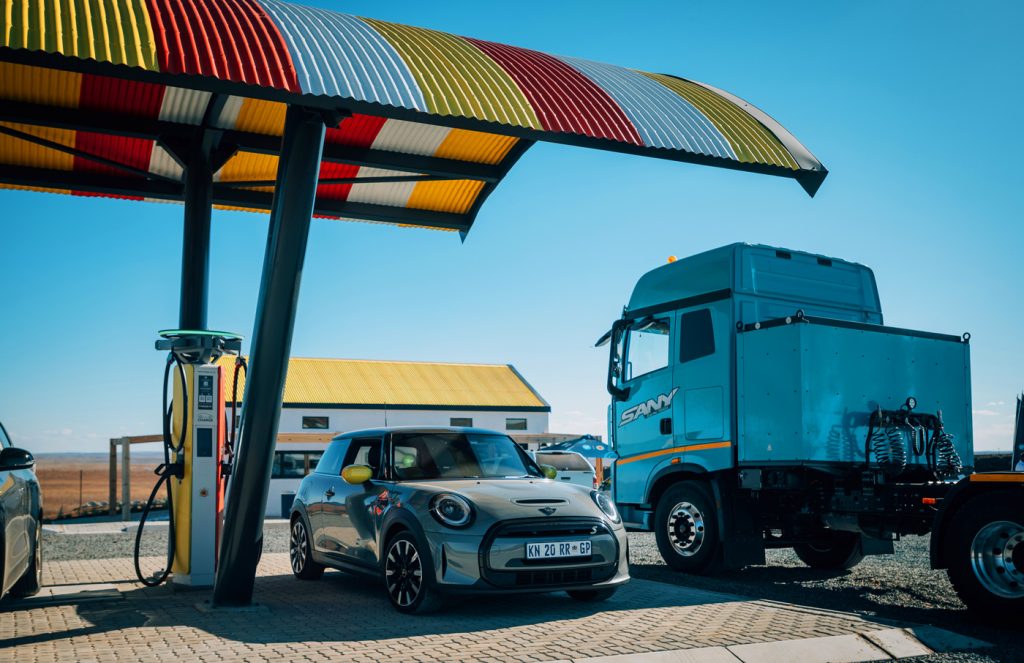
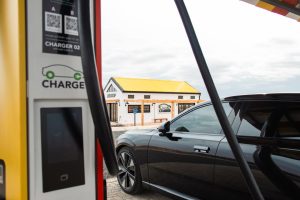
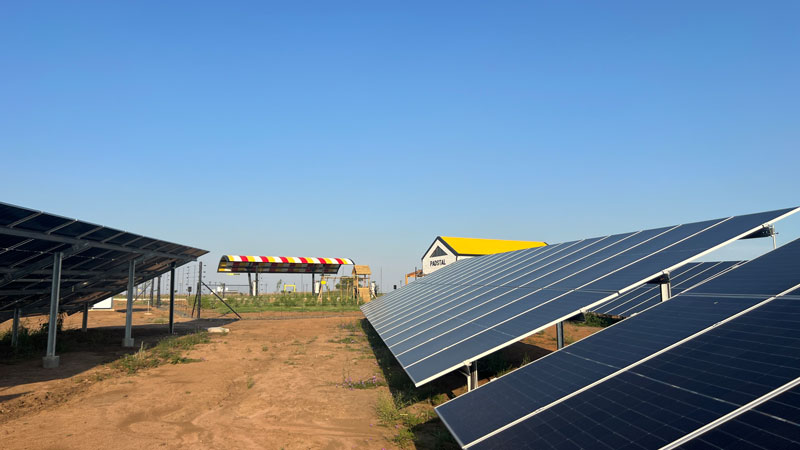
Rather than waiting for these constraints to be resolved, CHARGE’s project rollout was engineered around them. Our approach is based on a simple principle: generate transport energy where it is needed. Our electric vehicle charging network uses off-grid solar and battery microgrids that operate independently of Eskom, transmission bottlenecks and the frequency-stability constraints of a rapidly changing grid. Energy is generated, stored and consumed at the point of demand, creating a decentralised model better suited to South Africa’s energy realities.
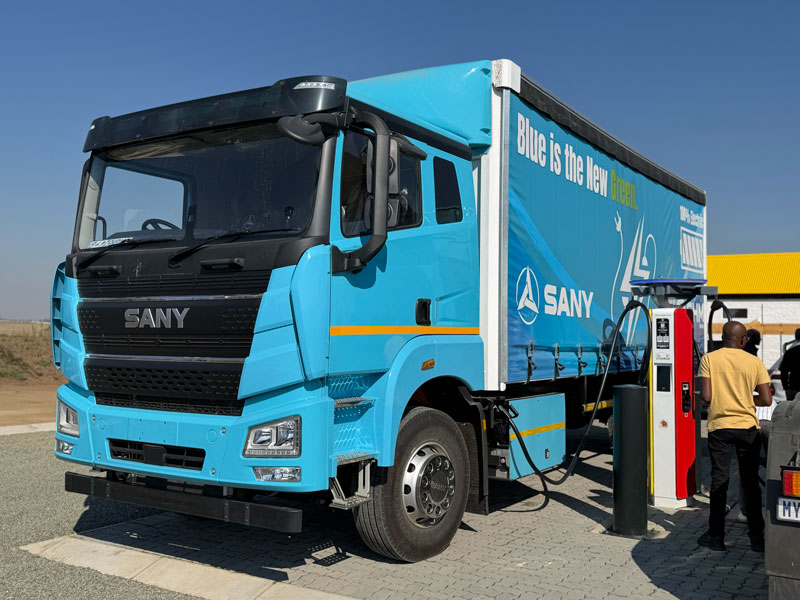
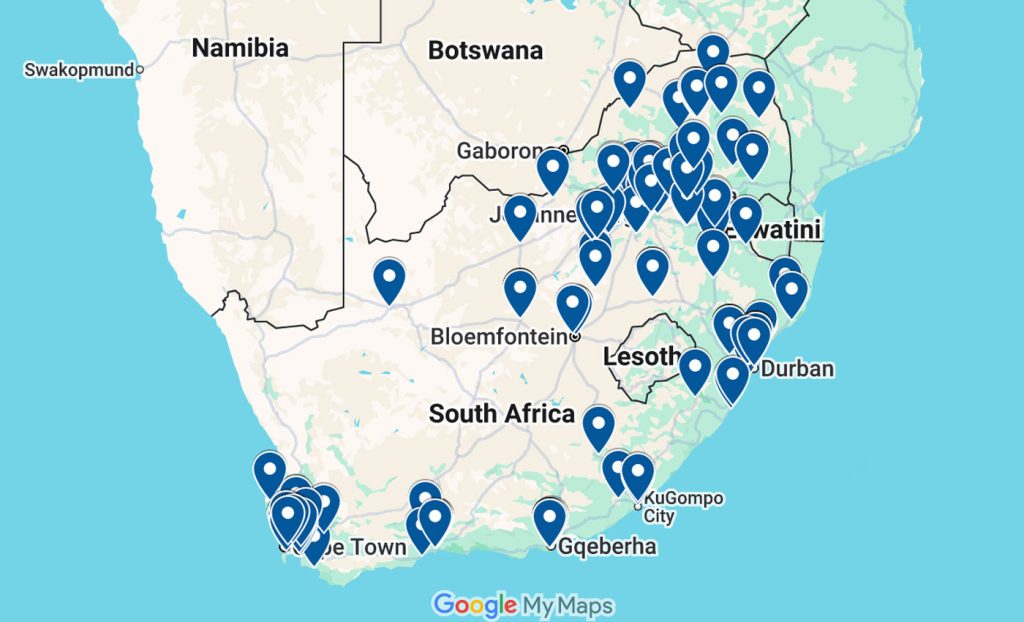
The operational data from our first month on the N3 illustrates the scale involved. Across three sites, our network delivered 7,891 kWh between 19 May and 18 June 2026. A single electric truck drew 104 kWh for a 10–100% charge, while six panel vans on overnight delivery routes consumed a combined 305 kWh. These are still early days, but they demonstrate that commercial demand for electric transport is already emerging. The wider market points in the same direction. Naamsa’s Q1 2026 figures show new energy vehicle sales up 31.5% year on year, with plug-in hybrid volumes increasing over the same period, from 241 units in Q1 2025 to 1,277 units in Q1 2026, a jump of over 430%.
Why Electric Vehicles and Renewable Microgrids Are More Energy Efficient
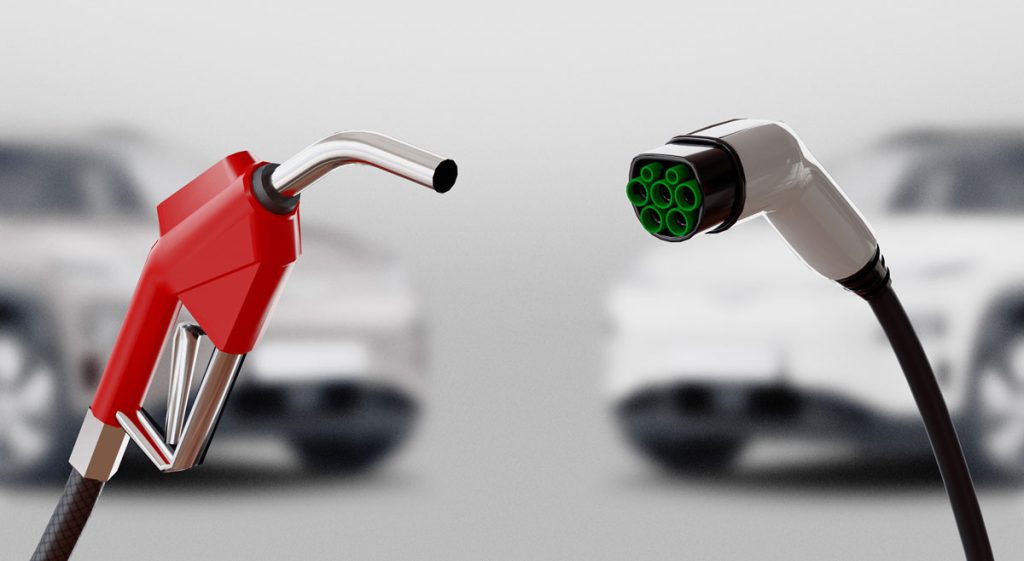
The growing adoption of electric vehicles is important for another reason. The opportunity extends beyond replacing petrol and diesel with renewable electricity. It is about using energy far more efficiently. Energy independence is not simply a question of generating clean power. It is about building smarter energy systems that waste less of it. At its core, energy efficiency means using less energy to achieve the same outcome. Electric vehicles are a clear example. They convert around 75% to 90% of the electrical energy stored in their batteries into movement. Conventional petrol and diesel vehicles convert only around 20% to 30% of the energy in their fuel into motion, with the rest lost largely as heat. In practical terms, an electric vehicle is roughly three times more energy efficient than an internal combustion engine vehicle.
The same principle applies to distributed renewable microgrids. By generating electricity where it is needed, they avoid many of the transmission losses that occur when power travels long distances across the national grid. Energy is produced, stored and consumed close to the point of demand, making better use of every kilowatt generated.
Together, microgrids and electric vehicles create a transport energy system that is not only cleaner, but fundamentally more efficient.
Local Energy Production: Keeping More Economic Value in South Africa
This is where localisation takes on a different meaning. It is not about manufacturing every component in South Africa. It is about producing the energy that powers our economy here at home. Like almost every country, our panels and batteries are sourced globally. However, by producing electricity locally rather than importing refined fuel, more of the value created by transport energy stays within South Africa.
For decades, South Africa has imported the energy that powers its transport economy. Off-grid charging infrastructure offers a fundamentally different model. One where transport energy can increasingly be generated where it is needed, rather than imported from thousands of kilometres away. That shift is not only about electric vehicles. it is about strengthening energy security, localising energy production and keeping more value within the South African economy.
Naamsa’s new vehicle sales quarterly reports were intended to assess business conditions in the automotive sector. But they also highlight something much bigger. Every conflict that disrupts global oil markets, every spike in fuel prices and every warning about inflation reinforces the same point, which is that South Africa’s dependence on imported transport energy carries an economic cost.
On Global Energy Independence Day, it is worth recognising that energy independence is no longer simply about producing clean electricity. It is about building smarter, more efficient energy systems that reduce waste, strengthen resilience and keep more value within the South African economy. That transition is already underway.
