






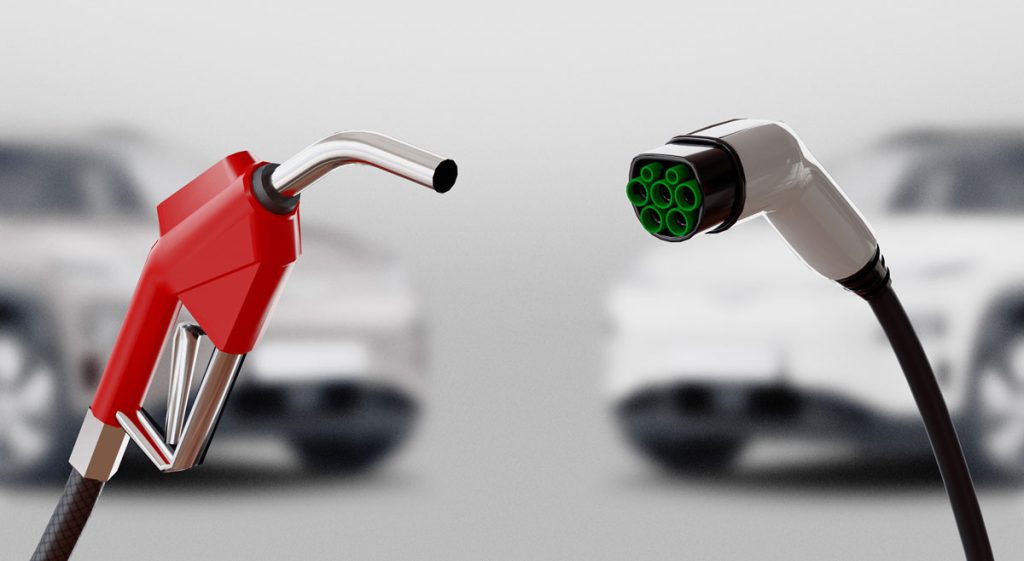
Since their emergence, electric vehicles (EVs) have raised the eyebrow of many safety-concerned drivers, unsure of what to make of these new machines. However, thanks to their growing popularity, EVs and their manufacturers have proven that the vehicles enhance safety rather than threaten it.
This begs the question: are EVs really safer than fuel-powered cars?
If you have been considering making the switch from gas to electric power for your vehicle here are a couple of considerations to keep in mind. Besides the obvious environmental benefits, safety is also a major factor to contemplate.
What does The Insurance Institute for Highway Safety (IIHS) have to say?
The Insurance Institute for Highway Safety (IIHS) has said that, due to the growing popularity of EVs, they have become inherently safer than fuel-powered vehicles. The IIHS has also stated that their Safety Pick of the Year list has been filling more and more with EVs. In 2022, EVs scored some of the highest scores in crashworthiness. They highlighted that the rate of injury is 40% lower for passengers and pedestrian collisions in EVs than it is in fuel-powered vehicles.
Safety benefits of an EV
EVs are less flammable than fuel-powered cars. The mere presence of gasoline in an internal combustion engine (ICE) vehicle is what makes it more dangerous. EVs contain lithium-ion batteries which are also combustible, however, they are not as dangerous or volatile as gasoline. Cell phones, computers and every day batteries share the same makeup as an EV battery and therefore cause the same minimal threat of combustion.
EVs have a lower centre of gravity. With the battery pack and motor placed at the bottom of the vehicle, these cars are more stable in the roads, easier to handle, and have a far lower chance of rolling over during sharp turns. This feature is matched with enhanced breaking systems, which improve stopping power and keep the vehicles steady.
To protect their batteries, EVs are built with a stronger structural design than fuel-powered cars. Their reinforced frames and robust crumple zones create better protection for drivers and their passengers during collisions.
More battery power means more safety features. Airbags, anti-lock breaking, and electronic stability, among others, are electronically built. The small battery in Internal Combusion Engine (ICE) vehicles, mean electric power is at a premium. EVs have ample energy to run advanced safety systems that are continuously evolving and improving.
One of the key features of EVs is that they are extremely quiet, causing many doubters to see the potential danger of silent machines on our roads for other drivers and pedestrians alike. The National Highway Traffic Safety Administration (NHTSA) therefore imposed a minimum sound requirement for EVs. To combat this, almost all EVs are fitted with an acoustic vehicle alert system, which makes a sound when the vehicle is travelling at a certain speed or reversing, marking themselves with a hum that alerts others with a far less offensive noise than their petrol-powered counterparts.
Should you make the switch from an ICE vehicle to an EV?
Globally, EVs are becoming more and more popular. They are undeniably better for the environment and are starting to look like the only viable long-term option for road transportation. With an increasing number of charging stations becoming available, such as the network being created throughout South Africa by Zero Carbon Charge, EVs are certainly the future, if not the present. The safety issues which concerned many consumers in the past are no longer a problem. The IIHS has concluded that EVs are as safe if not safer than fuel-powered cars, and if they’re good enough for an insurance institute, they’re good enough for us.
