





We hear a lot about the EV revolution in the US, Europe, and China — but what about Africa? Environmental awareness, climate-friendly policies, and green initiatives are on the rise on the African continent, and the uptake of EVs is following this trend.
There has been a ton of progress and there are many opportunities to be grabbed, as well as some significant challenges to be overcome.
Uniquely African
Transport makes up between a not insignificant 10-12% of Africa’s greenhouse gas (GHG) emissions and this is expected to rise as the population and average income increase. 70% of sub-Saharan Africa’s vehicle sales take place in South Africa, Kenya, Rwanda, Uganda, Ethiopia, and Nigeria. In these six countries, the vehicle parc is predicted to grow from 25 million vehicles today to approximately 58 million by 2040. The goal, of course, is to make as many of these electric as possible. How are we doing on that goal?
Unlike developed countries where private ownership is leading the way for EV adoption, it seems that in Africa the public transit sector is likely to be the catalyst that gets the electric ball rolling. And, again unlike elsewhere, it is not cars that are leading the way but other forms of transport Two- and three-wheelers are electrifying fastest—by 2040, electric two-wheelers are expected to rise to between 50 and 70% of all sales. In much of Africa, electric motorcycle taxis, called bodaboda, are already spreading. Uber recently launched a fleet of electric motorcycle taxis in Nairobi, a first for them in Africa and a sure sign of the times. They say that the electric bodas will cut costs for drivers by 30-35% and consequently reduce fares for customers by 15-20%.
The next to electrify will be minibuses, buses, and vans. Public transport in Africa is generally behind on-demand—hence the rise of two- and three-wheeler taxis—so the time for e-buses is ripe. China’s BYD has partnered with Golden Arrow Bus Services (GABS) in South Africa and is in the testing phase of rolling out an electric bus fleet. Stellenbosch University has recently retrofitted the first ICE minibus taxi to electric. The United Nations Environment Programme (UNEP) is working across Africa to provide electric public transport.
Leading the way
East Africa is at the centre of the continent’s impending pivot to electric. Kenya in particular is leading the way, both in EVs and in the renewable energy space more broadly. The Kenyan government has made a concerted effort to spur the revolution. They will soon require real estate developers to include EV charging stations in developments in the coming years and are aiming to increase their EV imports to 5% of total imports by 2025. To further incentivise buyers, they have reduced the excise duty on EVs to 10% (down from 20%). A remarkable 90% of Kenya’s energy comes from renewable sources, making it an especially suitable location for an EV surge. Consequently, e-mobility start-ups have proliferated. Roam Motors, for example, is locally producing Kenya’s first fully electric bus, along with electric motorbikes which they are selling through affordable payment plans. BasiGo is another Kenyan start-up selling electric buses using an accessible payment model that allows buyers to purchase EV buses at the price of their diesel equivalent and then pay off the balance through a subscription fee.
Nearby Rwanda is also making strides in the EV industry. The government has introduced tax breaks for EV buyers as well as lower electricity tariffs for charging and is working on a plan to electrify the public bus service. Other incentives include green license plates that allow preferential parking for EVs and restricted zones that are only accessible for EVs. There are a number of Rwandan start-ups that are selling locally-made EVs. And like Kenya, Rwanda is home to a growing range of budding e-mobility start-ups. A notable example is KABISA which sells and leases EVs and is rolling out a country-wide public charging network and an EV maintenance garage. The country’s 2030 goal is to have 20% of buses, 30% of motorcycles and 8% of cars electrified. It’s no wonder that Volkswagen chose Rwanda to launch their first electric car on the continent!
Tanzania is another East African country making inroads into the industry. At 5000 vehicles, Tanzania has more EVs on the road than the rest of East Africa combined, with electric scooters being particularly popular. Like its neighbours, Tanzania is home to a growing number of EV start-ups. E-Motion, for example, is leading the way for vehicle retrofitting, specifically for Safari vehicles, and has partnered with Arusha Technical College to provide skills training for EV maintenance. They plan to install charging terminals at petrol stations across Tanzania.
Yet another flower in East Africa’s cap, 90% of Uganda’s electricity comes from renewable energy sources, making them another prime target for the EV revolution. The Ugandan government, in collaboration with Makerere University, established Kiira Motors Corporation in 2014 which plans to develop and produce EVs that use solar or electric charging. This project has not made spectacular progress but as the EV market picks up it is expected to grow. The government is also engaging with private sector e-mobility companies and international development partners to explore the possibilities for a transition to EVs. Notable start-ups include Zembo, which imports and sells new e-motorcycles, and Modjo Energies, which retrofits ICE motorcycles to electric.
These East African countries are just the top players. All over Africa, from Toga and Benin to Morocco and Tunisia, EVs are getting a foothold.
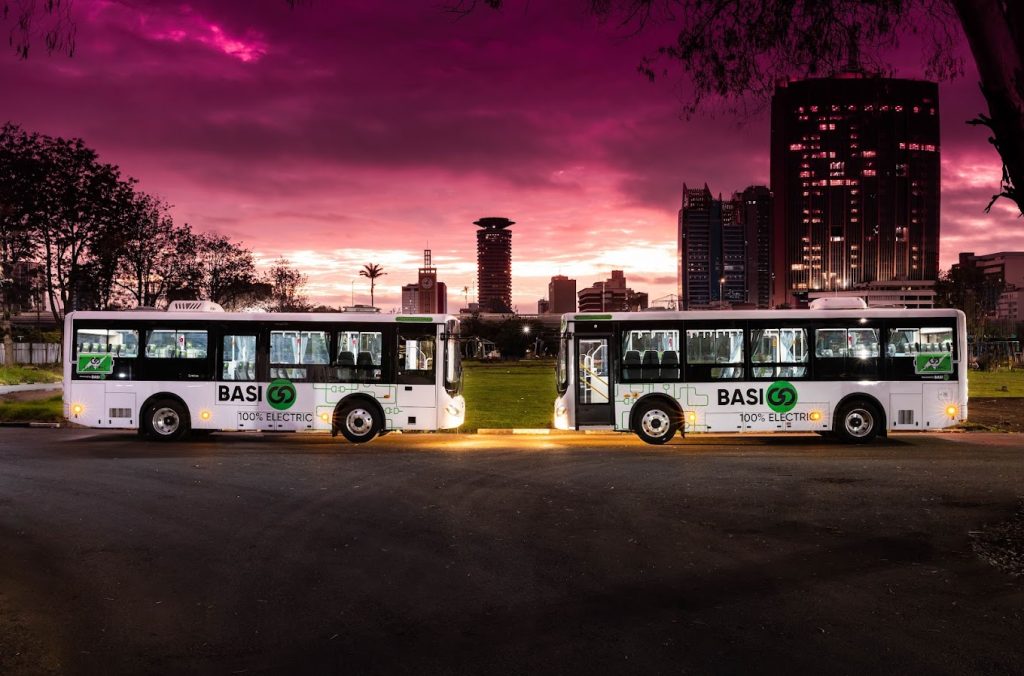
Image credit: BasiGo
Some challenges
All of this fantastic innovation leaves the future looking bright for Africa’s EV revolution, but there are some challenges that will need to be faced head-on for the continent to truly succeed. One of the biggest issues is that the African motor industry is dominated by used cars. And there is the risk that as the developed world transitions to EVs, Africa will become a dumping ground for their old ICE vehicles—40% of the world’s exported used cars already end up on the continent. In South Africa, importing used vehicles is banned, but in most of sub-Saharan Africa, up to 85% of all four-wheel vehicles are second-hand. The United Nations Environment Programme (UNEP) reported that out of the 49 sub-Saharan African countries, 40 have weak or very weak used-vehicle regulations. Older cars are less fuel efficient than newer models so this is a big problem for the environment and air pollution.
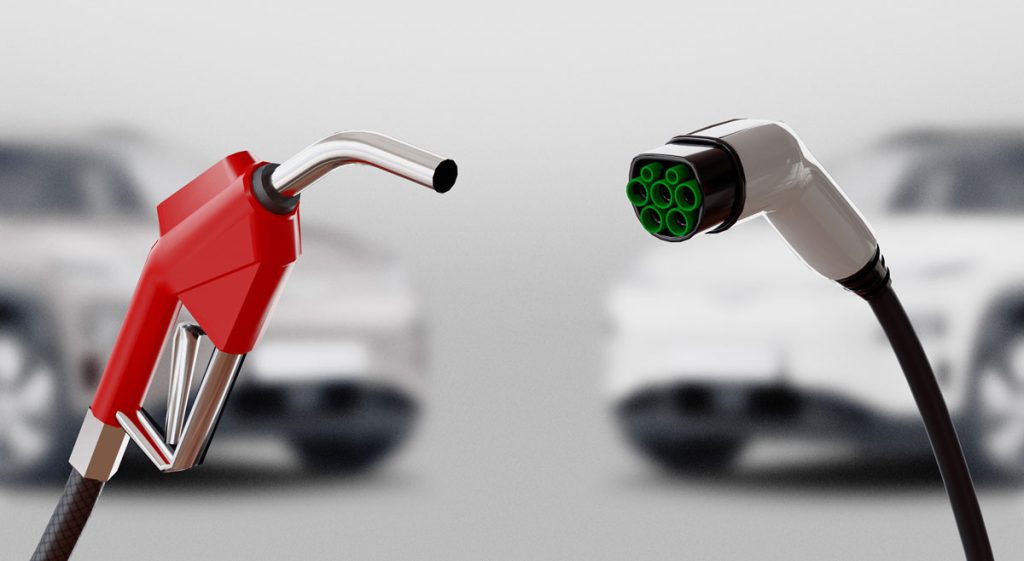
But used cars are more affordable and EVs are still more expensive, for the most part, than even new ICE vehicles. In the future, there will be a market for used EVs but this is still a while away. In the meantime, governments must provide tax incentives for EV buyers and place stronger regulations on the import of used cars. Affordable EVs will need to be more widespread. Currently, the EVs offered by Chinese companies are less than half the average price of an EV in Europe or the US, so it is no surprise that China is making a lot of headway in the African market, ahead of Western countries.
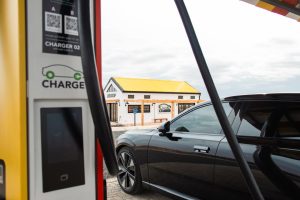
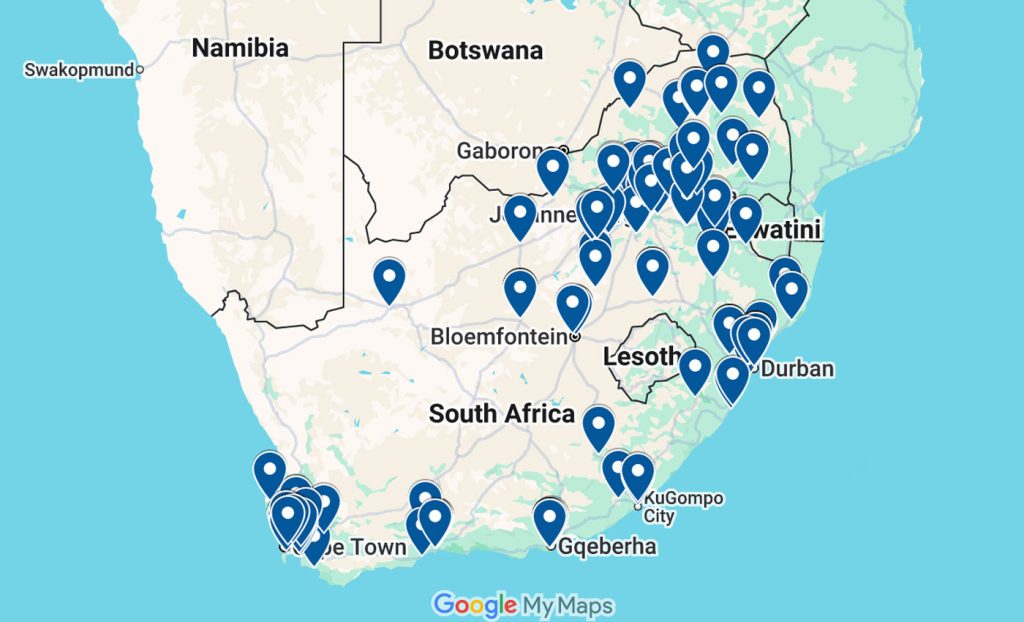
Another concern is Africa’s less-than-reliable electricity supply. This doesn’t need much explaining—we have all suffered under 17 years of the load-shedding nightmare. An upsurge in EV use will only put further stress on Africa’s already shuddering power grids. The solution is of course renewable energy. We must all take the lead from Kenya and Rwanda and turn our grids green. And if Zero Carbon Charge has anything to do with it (spoiler: we do!) then the problem of electricity supply can be imminently solved.
A world of opportunity
The challenges are real but the opportunities abound.
There is the radical opportunity for a large-scale African EV manufacturer. This would be an absolute game-changer for the continent. It would mean avoiding extremely high import tariffs by using the African Continental Free Trade Area (AfCFTA), making EVs far more affordable. It could also take advantage of the need to recycle old batteries from the West and China which would be both financially and environmentally beneficial. Another major plus would be the chance to develop an EV specific to the African context and African needs. For example, two-wheelers in sub-Saharan Africa tend to travel far longer distances daily than those in Asia so an African two-wheeler would need to be extremely durable and have the capacity to carry a spare battery. There are already some exciting start-ups working on specific kinds of electric vehicles—Ampersand in Rwanda, for example, is currently developing and manufacturing electric motorcycles—but as of yet, there is no large-scale African EV manufacturer. This is a major untapped opportunity.
Africa is rich in green minerals which provides the perfect set of circumstances to corner the market on battery production. Many of the minerals needed to create lithium-ion batteries such as cobalt, lithium, nickel and graphite can be found in a number of African countries, such as the Democratic Republic of Congo (DRC), Zambia, Tanzania and Gabon. The DRC in particular is well positioned to produce batteries precursor material at low cost and with low emissions, given their potential for hydroelectric power. The US has already made an agreement with the DRC and Zambia to set up value chains for EV batteries in both countries.
There are numerous other chances for job creation and upskilling in Africa’s nascent EV industry. There will be the need for mechanics who are able to fix up electric vehicles, from bodaboda to minibuses. Training a generation of such mechanics and upskilling mechanics who currently work on ICE vehicles will ensure that young people are ready for the changing job market and that current professionals don’t get left behind in the transition. Building charging stations and renewable energy plants is another great chance for job creation.
Leapfrogging
This could be Africa’s next leapfrog moment. It will not be the first time that Africa skipped the middle step and jumped straight into the future. The continent didn’t go from landlines and faxes to cellphones and smartphones; they started off with no communication technology and skipped straight to the digital age. Likewise, many Africans don’t have bank accounts in brick-and-mortar banks but have internet banking.
For the most part, African countries have low levels of motorisation, but as the continent gets richer and the population continues to grow, these levels will rise—why motorise with dirty petrol-fuelled cars when you could build a fleet of green buses?
ABOUT THE AUTHOR: Josie is a PhD candidate in Philosophy at King’s College, London. Her dreams for a greener planet include conserving the Western Cape’s tidal pools and the world’s bee population.
