






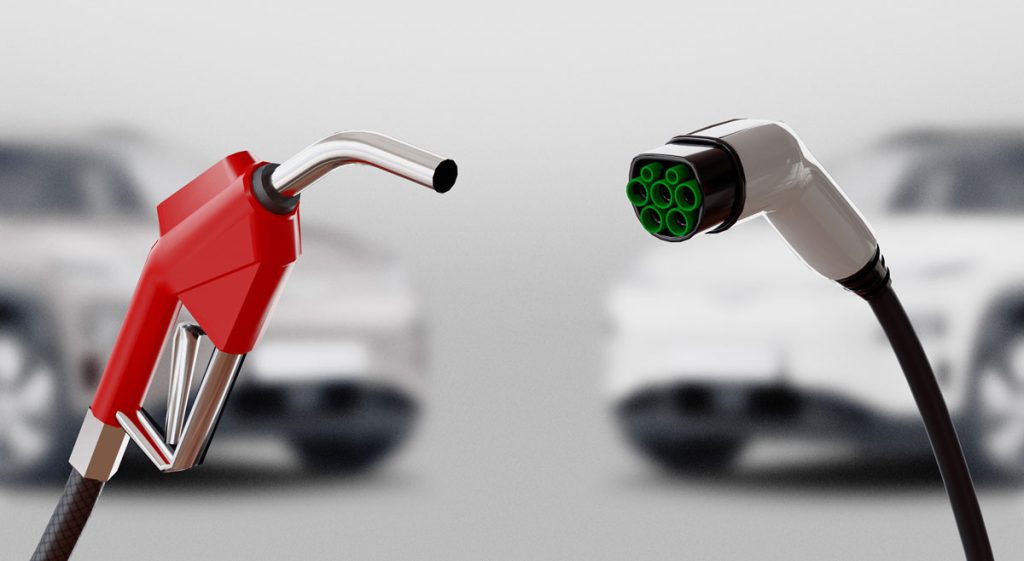
Electric vehicles are often described as zero-emission vehicles because, unlike petrol and diesel cars, they produce no emissions from the exhaust pipe. But there is another part of the equation that matters: where does the electricity used to charge them come from?
As South Africa marks Zero Emissions Day on 21 September, that is an increasingly important question. More South Africans are choosing electric and hybrid vehicles, but our electricity system remains heavily dependent on coal. If we want electric transport to deliver its full environmental benefit, we cannot only think about cleaner cars, but also about cleaner energy to power them.
The Department of Forestry, Fisheries and the Environment’s newly published 2024 Grid Emission Factors Report gives us a clearer picture of the challenge. It shows that the carbon intensity of South Africa’s electricity increased by around 5.3% in 2024, after declining between 2021 and 2023.
This matters as more electric vehicles make their way onto our roads. Electric vehicles produce no tailpipe emissions, but electrification alone does not remove the emissions associated with producing the electricity used to charge them. The cleaner the electricity used to charge an EV, the greater its environmental benefit.
That presents South Africa with an opportunity. Rather than centrally adding the electricity needed for transport to an already constrained national grid, we can generate clean energy where vehicles need it.
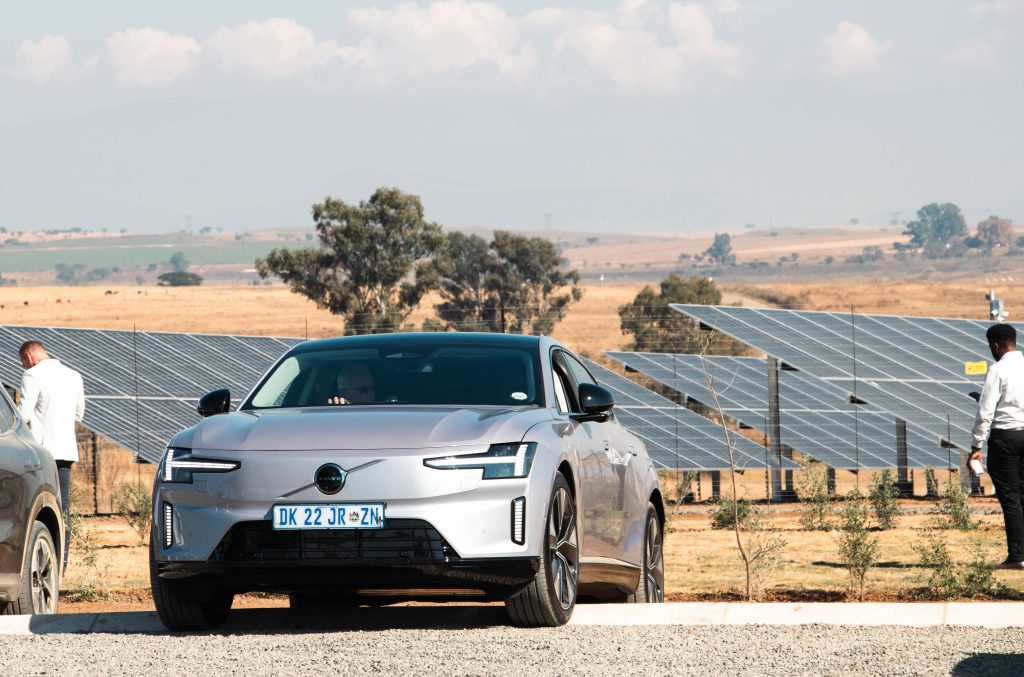
This can be achieved by solar-powered charging hubs supported by battery storage can generate, store and supply electricity directly to EVs without relying on the national grid. This is particularly well suited in South Africa, with abundant sunshine and major national transport routes carrying millions of passengers and freight journeys every year.
It also allows us to start thinking differently about transport energy. For decades, South Africa has relied overwhelmingly on petrol and diesel that must be produced and transported to filling stations across the country. Electric mobility creates an opportunity to generate some of the energy that powers our vehicles alongside the roads, where it is actually used.
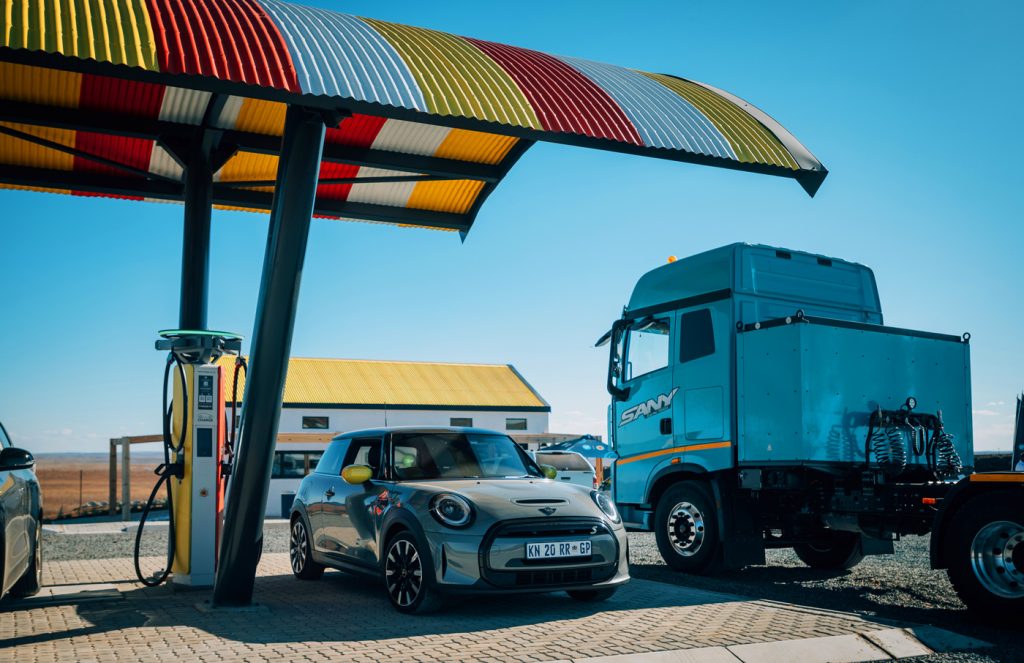
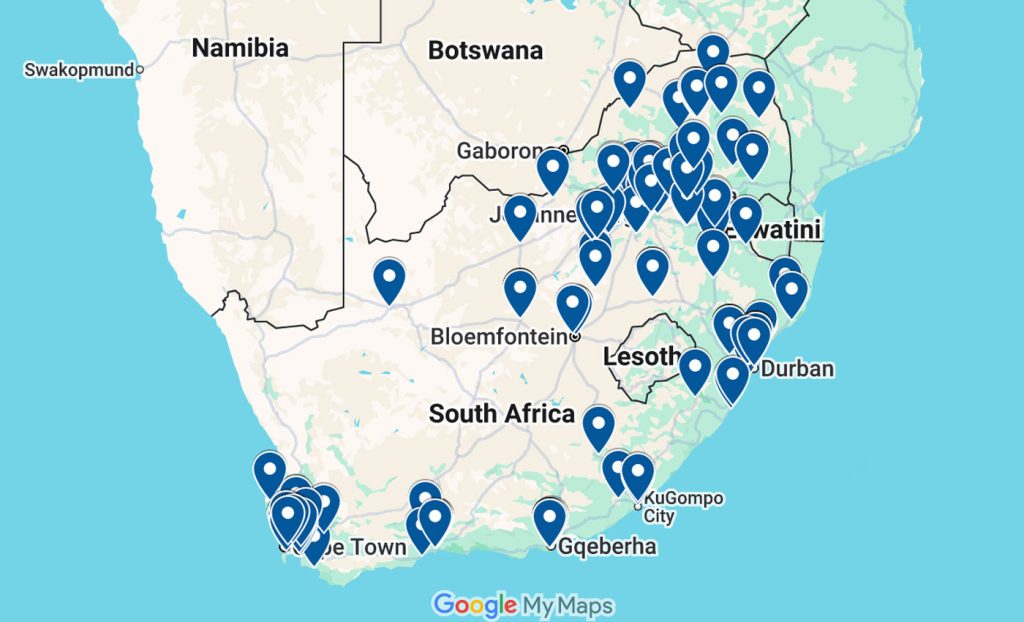
CHARGE is already applying this model along the N3 between Johannesburg and Durban, where it has established off-grid, solar-powered Charging Hubs serving passenger vehicles and commercial trucks. The hubs generate their own electricity from solar power, store it in batteries and make it available to EV drivers when they need to charge.
The planned expansion of the two N3 hubs is expected to give them the potential to generate approximately 1.6 GWh of renewable electricity a year. CHARGE estimates that, once expanded, the two hubs could avoid approximately 1,450 tonnes of CO₂-equivalent emissions annually compared with drawing the same electricity from the national grid. Since launching, CHARGE has avoided a net 40.88 tonnes of CO2 emissions.
Another important benefit is often overlooked. Switching to an EV does not only cut carbon emissions; it can also help reduce the air pollution people are exposed to on our roads. Petrol and diesel vehicles release nitrogen oxides (NOₓ) and other pollutants directly from their exhausts, affecting the air in the places where people live, work and travel. EVs produce no tailpipe emissions, although if they are charged using electricity generated from fossil fuels, some of those emissions are simply shifted from the road to the power station. Charging EVs with off-grid renewable energy goes a step further by cutting pollution at the roadside while also avoiding the emissions linked to fossil-fuel electricity generation.
As electric vehicle numbers grow, this kind of infrastructure, particularly on longer journeys, will become increasingly important. Drivers need to know they can travel between our major cities and find reliable charging along the way, with the bonus that the electricity powering their EVs is as clean as possible.
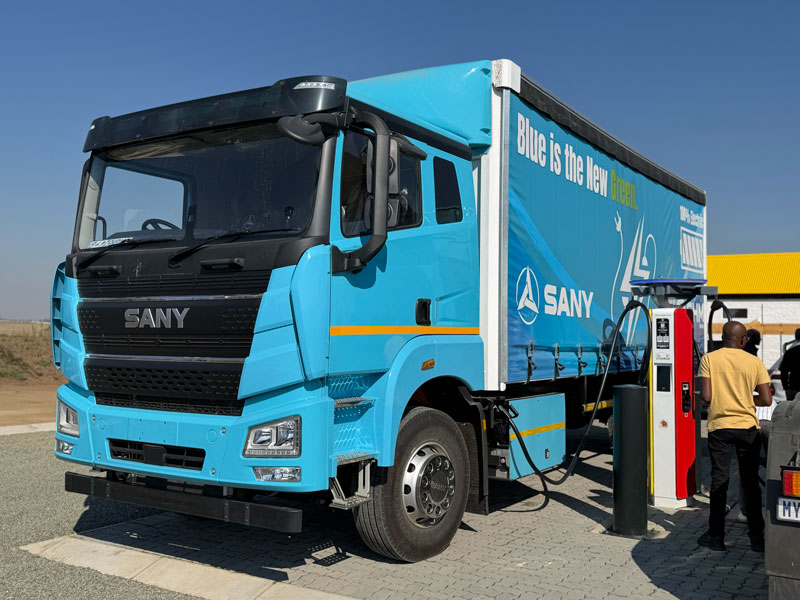
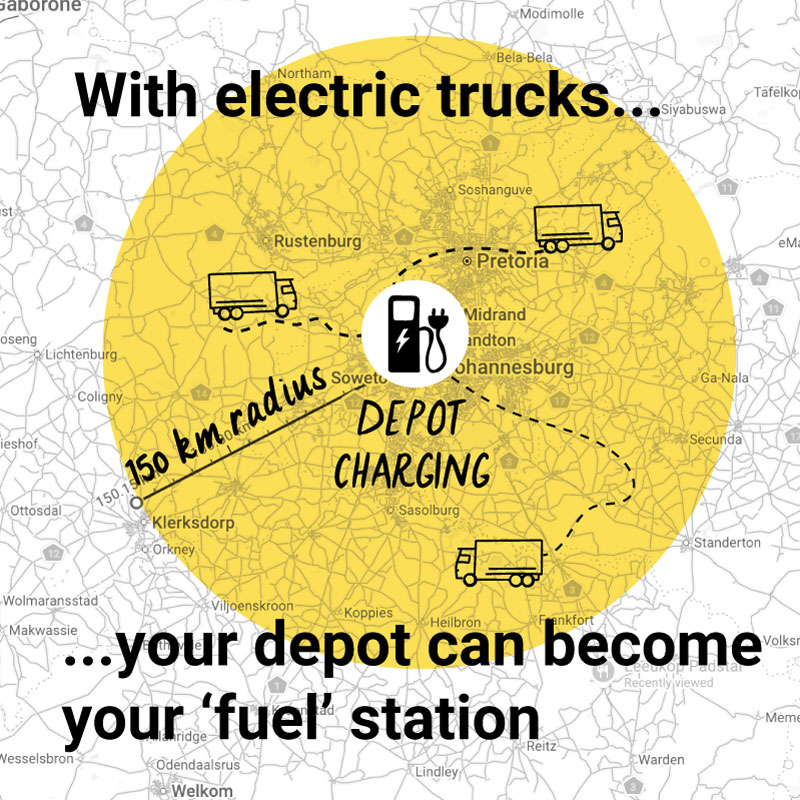
Freight is particularly important. A truck travelling between Johannesburg and Durban several times a week burns 9 times more fuel than the average passenger car, which means electrifying freight can have an outsized impact on emissions reduction, but logistics and machine companies will only make the switch if the charging infrastructure is there to support them. That means building high-powered charging along the routes they travel before electric freight reaches scale, not afterwards.
Cleaner transport also has benefits that extend beyond climate change. Petrol and diesel vehicles contribute to the air pollution experienced every day in our towns and cities, with consequences for both our health and our economy.
The United Nations Environment Programme’s Hidden assets: The economic and health case for climate and clean air action report makes the link between climate change and air pollution clear. Both are driven in large part by the burning of fossil fuels, which means measures that reduce fossil-fuel use can deliver benefits on both fronts.
Its research looks at a range of solutions, including renewable energy and electric vehicles, and finds that the economic and health benefits of cleaner energy and transport can substantially outweigh the costs of making the transition.
This means that cleaner transport should not be viewed simply as an environmental obligation or another cost South Africa has to absorb. It is also an opportunity to build new infrastructure, produce more of our own transport energy and reduce the pollution affecting the communities in which we live.
We now have an opportunity to choose what the next generation of transport infrastructure should look like. We can electrify vehicles while continuing to rely heavily on fossil fuels to generate the electricity that powers them, or we can use the transition to build cleaner energy along the roads and transport infrastructure the country needs.
Electric vehicles are an important part of the shift to cleaner transport, but changing what we drive is only half the equation. If South Africa wants to get the greatest benefit from electric mobility, we also need to change how we power it.
Roux is Co-Founder and Chair of CHARGE.
