



By Ciska Kruger, Chief Sustainability Officer at CHARGE
The geopolitical shock that sent South Africa’s fuel prices to historic highs has exposed a structural vulnerability every business leader needs to understand — and act on.
The trigger: A war that rewrote the energy rulebook
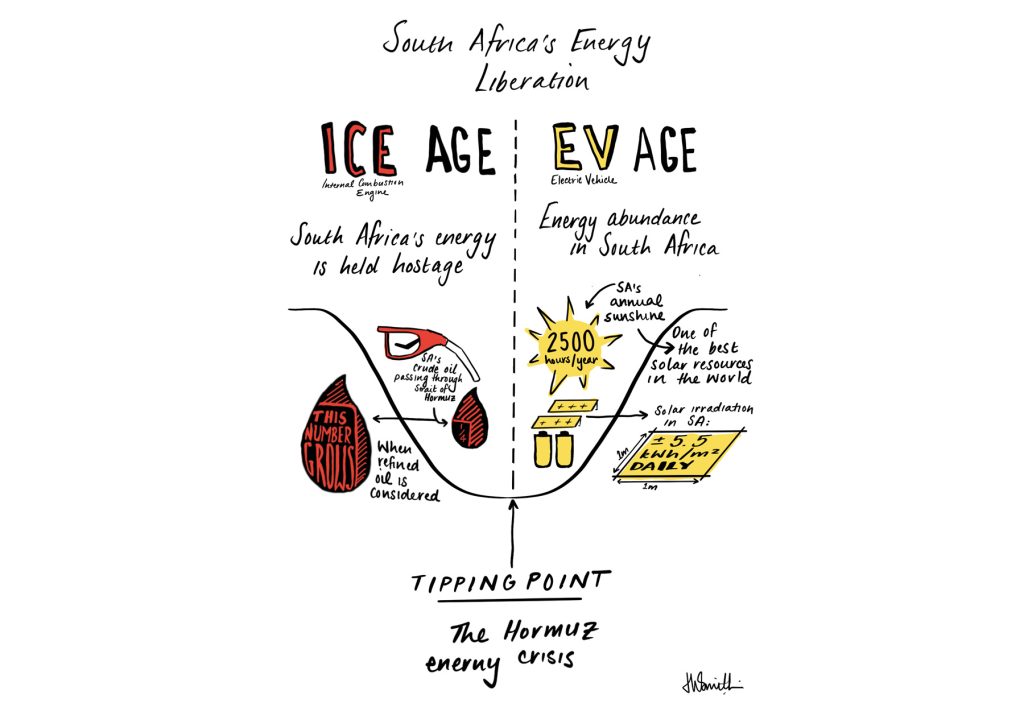
The world woke up on 28 February 2026 to a new kind of energy crisis — one not born of Organization of the Petroleum Exporting Countries (OPEC) quotas or pandemic shutdowns, but of missiles and geopolitics. The United States and Israel attacked Iran, triggering retaliatory strikes across the Persian Gulf and the effective closure of the Strait of Hormuz — the narrow waterway through which approximately one fifth of the world’s seaborne oil trade flows. The International Energy Agency’s head described the resulting situation as ‘the greatest global energy security challenge in history.’
The consequences arrived at South African forecourts within weeks. On 1 April 2026, petrol prices jumped by R3.06 per litre, while diesel surged by up to R7.51 per litre — pushing 95 Unleaded to around R23.36 inland and wholesale diesel to roughly R26.11 in Gauteng. These increases came despite a temporary R3-per-litre government levy cut introduced to soften the blow.
With that relief extended into May and June, but set to taper thereafter, projections from the Central Energy Fund indicate further sharp increases — with diesel expected to rise by approximately R10.8 per litre under current conditions.
The environmental cost
Beyond the headline numbers lies a sobering environmental reality: price shocks do not reduce fossil fuel dependency — they expose it. As tanker traffic through the Strait of Hormuz ground to a near-halt, the world scrambled for alternatives including dirtier, longer-route shipping and the emergency release of strategic reserves. The carbon cost of this geopolitical disruption is enormous and largely absent from any emissions accounting.
South Africa moves more than 80% of its freight by road, with diesel accounting for the single largest cost component in road logistics — making it a critical input to the industry. Every price shock shines a light on how profoundly exposed the country’s supply chains — and its carbon footprint — are to events happening thousands of kilometres away.
The paradox: Why price shocks simultaneously delay and demand the green transition
Here is the uncomfortable truth: a fuel price crisis is both the strongest argument for the green transition and one of the most powerful forces working against it — at the same time.
Why price shocks delay the transition
When diesel prices spike suddenly and severely, businesses are thrown into immediate financial survival mode. The consequences are predictable and well-documented:
- Capital earmarked for EV fleet upgrades or charging infrastructure gets redirected to cover the higher fuel bill this month.
- Lenders become more conservative when operating costs across the board are volatile — raising the cost and difficulty of green financing.
- Government attention pivots to short-term relief measures — like the R3/litre levy cut — rather than long-term structural energy transition policy.
- Business owners default to the familiar — keeping diesel fleets they know how to manage — rather than assuming new technological risk during a crisis.
In short: a price shock consumes the financial and mental bandwidth that the green transition requires.
Why the same price shock makes the transition non-negotiable
And yet, the very same crisis viscerally demonstrates why fossil fuel dependence is a structural liability that no risk-conscious board should accept indefinitely. Every R7/litre diesel hike is a live demonstration that:
- Your operating costs are hostage to events entirely beyond your control — a war in the Middle East, a weakening rand, a blocked shipping strait.
- Your supply chain resilience is only as strong as the most fragile link in the global oil market.
- Every month you remain on fossil fuels is another month of unhedged geopolitical risk sitting inside your income statement.
The crisis doesn’t just make EVs greener. It makes them the only rational commercial risk management decision for any business that moves goods or people.
The social fallout
The human cost of this crisis is not abstract. For more than 30 million South Africans living at or below the poverty line, fuel price increases pose a direct threat to food security and mobility. For many low-income households, transport can consume as much as 25% to 40% of monthly income. Taxi associations typically warn of fare increases following fuel hikes, while logistics companies face mounting pressure to either absorb rising costs or pass them through the supply chain.
Over time, these increases feed into the price of basic staples such as maize meal, bread and milk. The April 2026 fuel shock also coincided with double-digit electricity tariff increases approved by NERSA, compounding pressure on households already operating with little financial buffer.
The governance imperative
For boards, investors, and regulators, this is the governance signal that cannot be ignored. Energy sovereignty is not merely an ESG aspiration — it is a business continuity imperative. The South African government’s own announcement confirmed that the average Brent Crude price surged from an average of $69.04 to over $105 per barrel due directly to the US-Iran conflict. A temporary levy cut provided limited relief. It did not provide insulation.
In this context, any business strategy that treats fuel price volatility as an external factor beyond planning scope materially underestimates risk exposure.
The CHARGE proposition: Immunity, not just sustainability
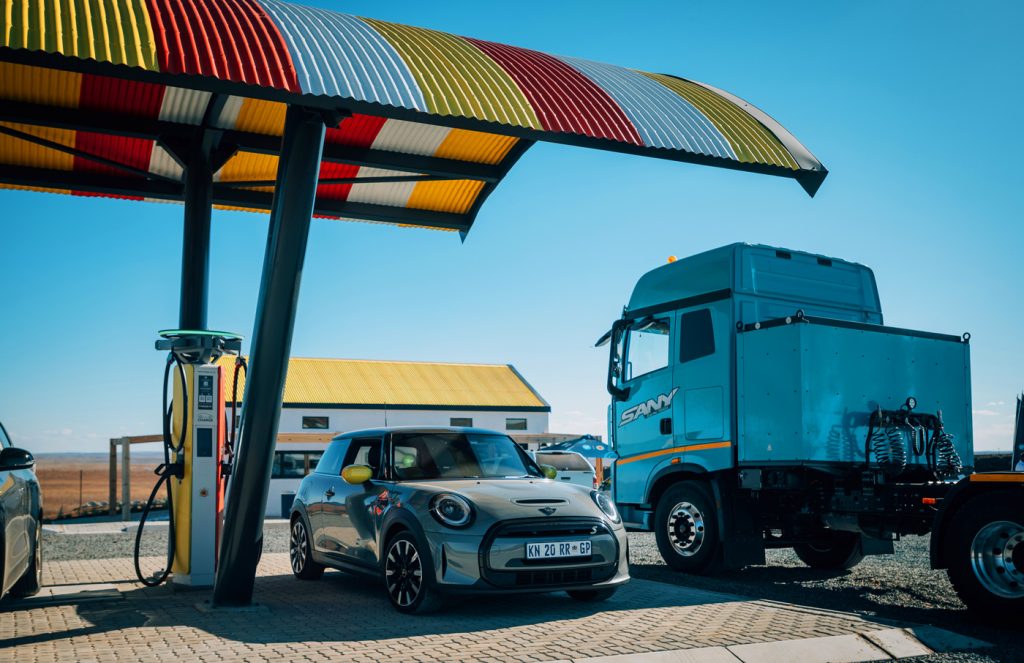
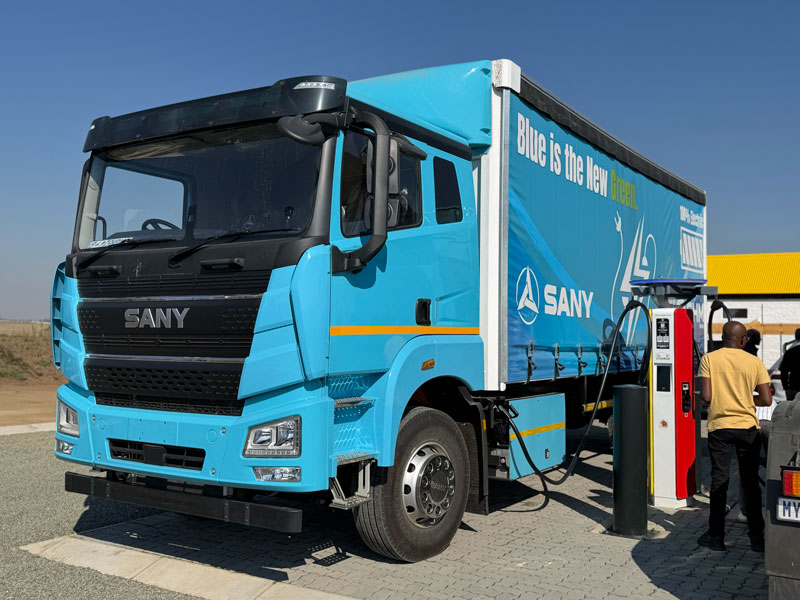
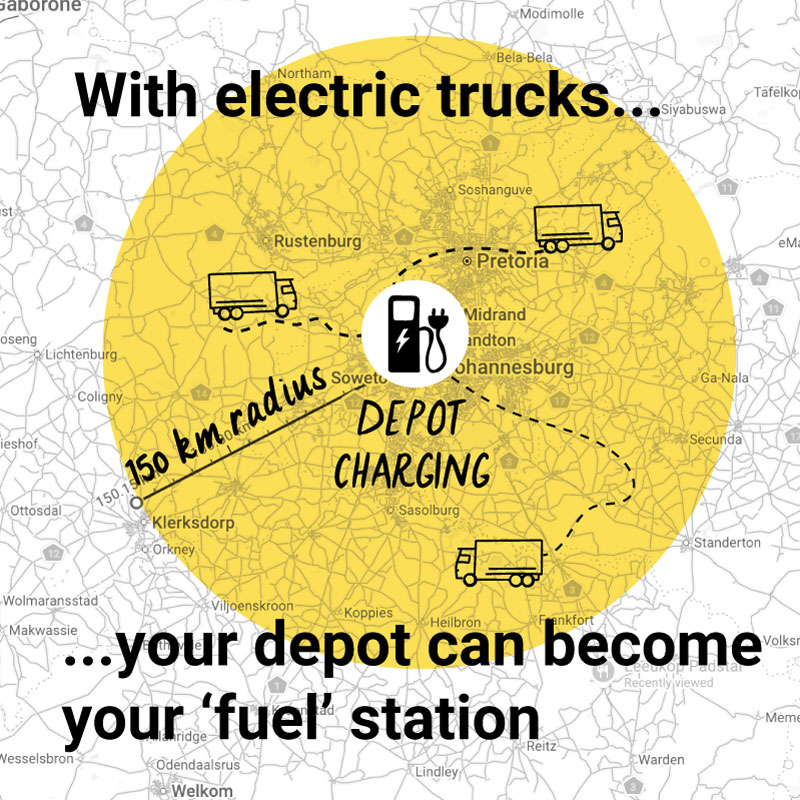
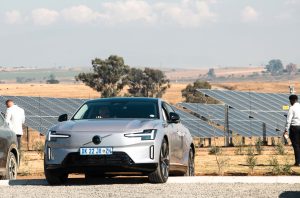
This is precisely the problem that CHARGE was engineered to solve. CHARGE’s off-grid, solar-powered EV charging infrastructure decouples mobility from oil markets entirely.
There is no Strait of Hormuz in CHARGE’s cost model. There is no rand/dollar exchange rate risk. There is no monthly fuel price announcement to dread and no geopolitical event that can reprice the energy input overnight.
For fleet operators, logistics companies, and commercial property owners, the value proposition in April 2026 was clearer than it has ever been: the cost of charging an EV from solar is not subject to geopolitical shocks. It is stable, locally generated, and structurally immune to the forces that is projected to push diesel past R32 per litre in May.
This reframes the entire conversation. The argument for electrification is no longer primarily about carbon targets or ESG reporting. It is about commercial risk management — removing an uncontrollable, volatile input cost from your business model and replacing it with one that is predictable, scalable, and sovereign.
You cannot control what happens in the Strait of Hormuz. You can control whether it has the power to bankrupt your logistics operation.
The question is no longer whether — it is when
The Middle East crisis did not create the argument for the energy transition. It made that argument impossible to ignore for any South African business owner or executive who reviewed their April 2026 diesel bill.
The paradox resolves this way: the crisis delays the transition for those who react to it. It accelerates the transition for those who understand it.
**All fuel price data sourced from the South African Department of Mineral and Petroleum Resources, Central Energy Fund, and IOL/AutoTrader industry reporting (April 2026). Oil market data sourced from Al Jazeera, NPR, and CNBC (February–April 2026).