

24/7 Support
For urgent support phone:
0800 777 434
Or send a message via our online form. We will get back to you within 24 hours.


HOW MUCH CAN YOU SAVE?
In this scenario, we assume a balanced charging mix, with 50% of charging done at home and 50% at public chargers at a rate of R9.15 per kWh, providing a realistic view of blended running costs.
| Category | Petrol Hatchback |
Electric Hatchback |
Savings |
|---|---|---|---|
| Purchase Price | R 400,000 | R 400,000 | R 0 |
| Energy Cost | R 336,000 | R 198,100 | R 137,900 |
| Maintenance & Repairs | R 45,000 | R 28,000 | R 17,000 |
| Estimated Total Cost | R 761,000 | R 746,100 | R 14,900 |
| Annual Distance | 25,000 km |
| Term | 7 years |
| Home vs Public charging split | 50/50 |
| Petrol efficiency | 8 L/100km |
| Electric efficiency | 16 kWh/100km |
| Public charging | R9.15/kWh |
| Default fuel price source | AA website Fuel Pricing 1 April – Petrol Unleaded 95 (Inland) |
| Insurance | The insurance of both vehicles is assumed to be equal |
| Energy price inflation | Petrol and Electricity are assumed to increase by 8% per year for 7 years |
| Public charging inflation | Public charging is assumed to increase by 5% per year for 7 years |
|
All figures include VAT.
|
|
This table is a simple side-by-side estimate of what it could cost to own a petrol hatchback versus an electric hatchback in South Africa over 7 years.
It is meant to be a practical guide, not a prediction of exactly what every driver will spend. |
|
It compares the main costs shown in the model only: the purchase price of the car, energy or fuel, routine maintenance, and insurance.
It does not try to capture every possible cost of ownership. |
|
For this example, both vehicles are assumed to cost R400,000 upfront.
R0.00/kWh for home solar if applicable, and public charging at R9.15 per kWh. |
|
The EV example also assumes the driver can charge at home and, in examples where it is assumed the driver has home solar, that 100% of home charging comes from solar, which lowers charging cost.
Insurance is assumed to be the same for both cars at 2.5% of car price per year, while EV maintenance is assumed to be lower than petrol maintenance. |
|
Actual costs will still vary depending on how far you drive, where you charge, future fuel and electricity price changes, and the specific vehicle you choose.
The table should therefore be read as an illustrative ownership comparison rather than a guaranteed saving. |

Click on a logo to find a dealership near you









Electric vehicles use electricity, which costs less per km
Electric motors are also far more efficient — they convert most of the energy into movement, while petrol engines waste a lot as heat.
When charging from solar, your energy cost can drop even further, reducing your cost per kilometre. Charging from solar also protects you from fuel price volatility — making your driving costs both cheaper and more predictable.
EVs have fewer components, no oil changes, and less wear on braking systems.
Over time, this reduces servicing and maintenance costs.
EVs recover energy when slowing down.
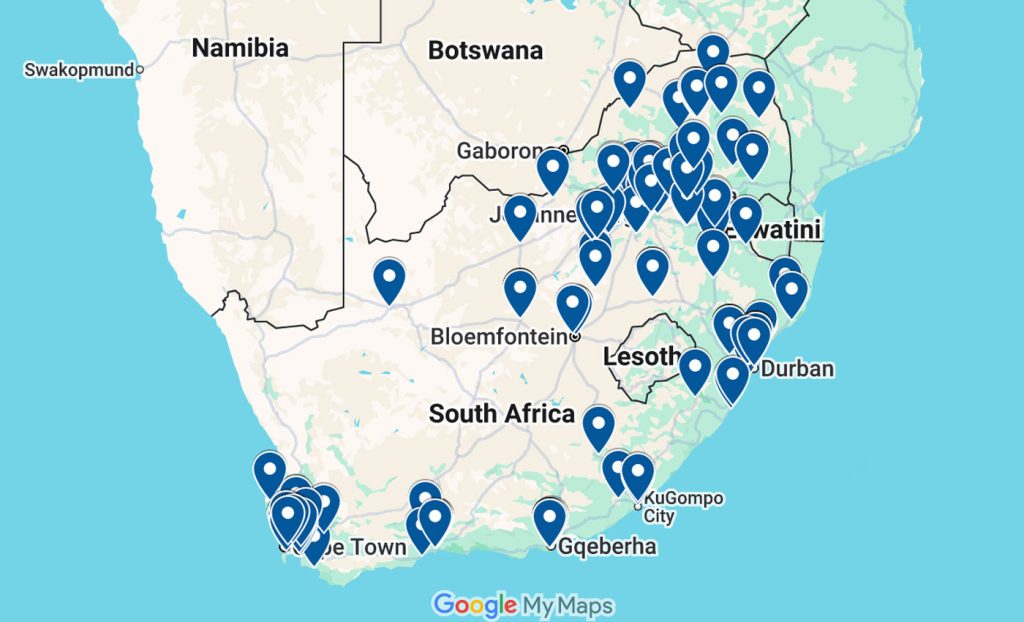
Our growing network now serves two key corridors:
the N3 connecting Johannesburg and Durban, and the N12 connecting Johannesburg and Kimberley.